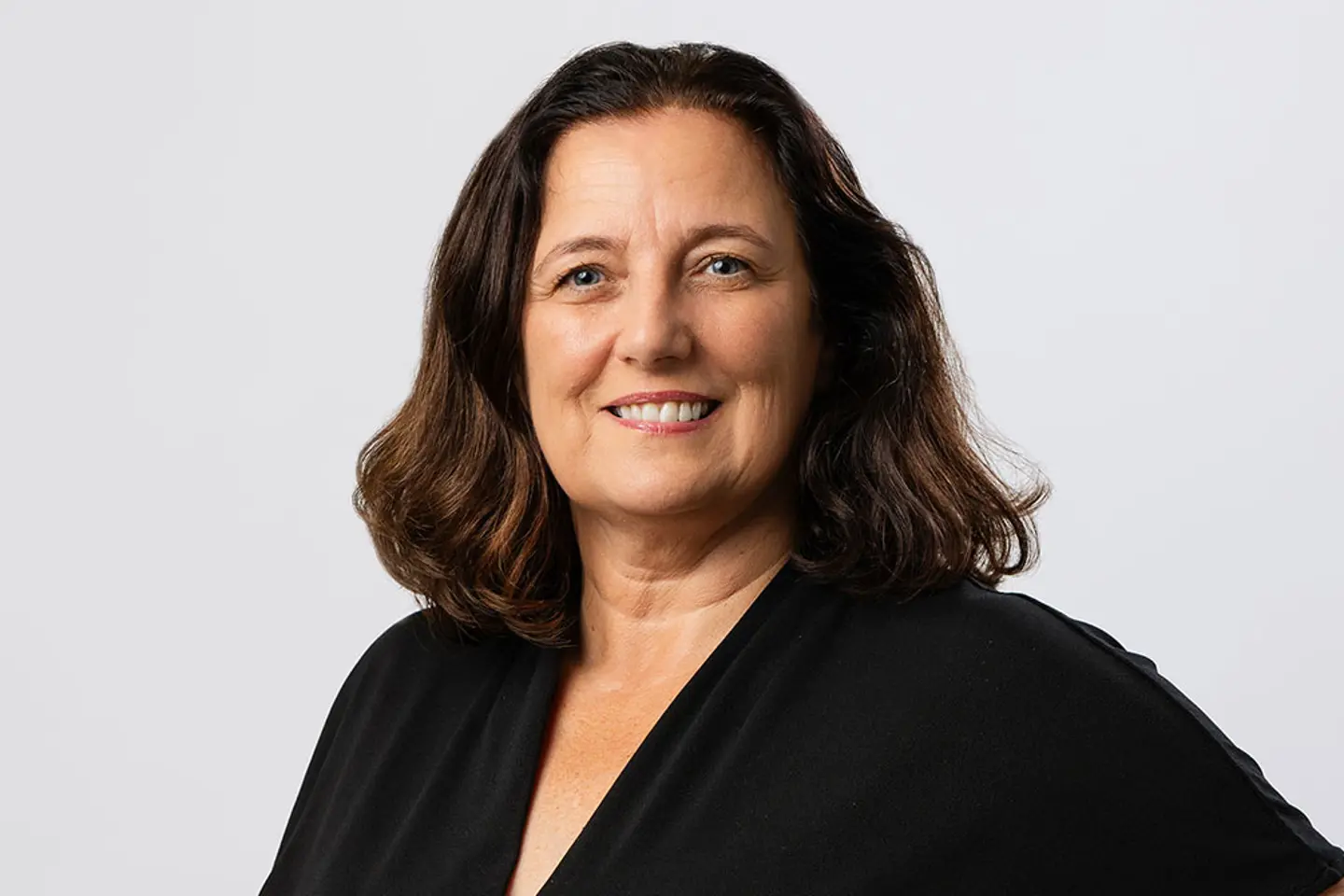
Deborah Barker Roye
Partner | Legal
Cayman Islands

Deborah Barker Roye
Partner
Cayman Islands



ON THIS PAGE
RELATED
As we approach the 30th anniversary of STAR Trusts in the Cayman Islands, we take a look at the developments and clarifications around these structures since their establishment. With the passage of time, in addition to the statutory framework, we now have the benefit of accompanying case law clarifying the rights and obligations of the involved actors, together with international recognition from foreign courts.
This review outlines the key developments in the area for everyone exposed to existing STAR Trusts or those considering the structure as a potential vehicle, including settlors, trustees, enforcers, beneficiaries and third-party service providers.
A STAR Trust is a form of statutory trust that is unique to the Cayman Islands. The name, "STAR Trust", refers to Part VIII of the Trusts Act and is an acronym for the name of that Part; Special Trusts – Alternative Regime.
A Cayman Islands STAR Trust differs from a standard form discretionary trust in two key ways:
If choosing to settle a trust for the benefit of beneficiaries, why would a settlor choose a STAR Trust over a standard form discretionary trust? One of the key advantages of the structure is to reduce the scope for trust funds being depleted through familial squabbles, which usually arises from the beneficiaries having standing to enforce their own rights, rather than the enforcer.
Where all beneficiaries have standing to enforce their rights, rather than one fiduciary appointed to act on all beneficiaries' behalf, the enforcement of competing interests can often result in time consuming and expensive litigation.
However, in a STAR Trust, the enforcer is the only party with standing to enforce the beneficiaries' rights. The enforcer must weigh up the competing interests of all beneficiaries and act in the best interests of the beneficiaries as a whole. The structure consolidates power into one entity and ensures all beneficiaries' interests are represented and considered, while reducing the scope for litigation by mitigating the risk of in-fighting between beneficiaries.
To date, however, there has been some uncertainty on how much trouble a beneficiary can cause in trust proceedings involving a STAR Trust. What is a beneficiary's role and how much weight will a court give to their individual views against those of an enforcer?
The G Trusts litigation concerns a Cayman-based trustee of a STAR Trust receiving certain assets from a separate trust. The validity of the transfer is disputed in separate proceedings in Hong Kong.
Ogier, acting for the Cayman-based trustee, applied on the trustee's behalf to the Cayman Court for:
i) administration relief – the trustee sought court approval for it to administer the assets on the terms of the G Trust pending the determination of the issues in the foreign proceedings, including the validity of the transfer of assets into the G Trust
ii) beddoe relief for participating in the foreign proceedings in a neutral capacity, so reasonable costs associated with the trustee's participation in the foreign proceedings could be deducted from the assets currently held by the trustee
iii) beddoe relief for bringing a construction and rectification application, which would confirm costs protection for the trustee bringing a separate application for the construction of a deed of addition of beneficiaries and, if the true construction did not reflect the intention of the document, applying to rectify it in accordance with that intention
The enforcer and the beneficiaries were joined to the application. The above relief was ultimately granted by the court, despite a number of objections raised by a selection of the beneficiaries of the Trust. The decisions arising from the application covers the weight which should be given to the objecting views of a beneficiary in similar applications.
In determining the beddoe relief for the construction and rectification application, a question considered by the court was whether a party should be appointed to present the counter-position to the applicant trustee, and if so, who the appropriate party would be.
The court ultimately found that there was no automatic need for a counter argument in rectification applications under Cayman Islands law and in any event, case management issues should be determined by the judge hearing the application, as opposed to the beddoe judge.
However, the court, having referenced the “far more muted” voice of a beneficiary of a STAR Trust and the roles and responsibilities of the enforcer, observed that its preliminary view – that the objecting beneficiary group may be appropriate parties to present counter arguments – had been displaced, suggesting that the enforcer might be more appropriate party to take any such role where necessary.
The enforcer enforces the trust on behalf of the beneficiaries. They hold the trustee to account and ensure that the trust is administered in furtherance of its purposes and/or for the best interests of the beneficiaries as a whole.
The enforcer will often be party to trust proceedings concerning a STAR trust – either as applicant or joined as a respondent – so the views of the beneficiaries may be represented at those proceedings through the enforcer.
Beneficiaries of a STAR trust don’t necessarily need to be parties to trust proceedings, but an applicant may wish to join them for a number of reasons:
Where beneficiaries of a STAR trust are joined to trust proceedings, it is important to understand the weight the court will give to their views. As mentioned above, Mr Justice Kawaley (retired), in the second rectification beddoe decision, accepted: "…the unanimous broad submission that the voice of a beneficiary in relation to a STAR Trust is far more muted compared with the standard position in relation to an ordinary trust."
In a subsequent decision as to costs, Mr Justice Kawaley added, without making any definitive finding on the point,: "Does the STAR Trust regime impose more onerous burdens upon beneficiaries whose interests are legally protected by an Enforcer to exercise restraint when invited to participate in a directions proceeding? I would answer affirmatively if required to resolve this question."
As to the weight that the court will give the views of the enforcer, Mr Justice Kawaley observed: "…in the context of a partisan dispute between beneficiary factions in which the Trustees are obliged to adopt a position of neutrality, the Enforcer's non-partisan views of where the best interests of the beneficiaries lie potentially carry considerable weight."
Aside from the fact that the court will likely place less weight on the views of the individual beneficiaries and greater weight on the views of the enforcer, the G Trusts litigation also demonstrates that a beneficiary or beneficiary group can be penalised if they unreasonably disregard or fail to engage with the enforcer on their proposals in the litigation more generally.
In the "costs of the costs" decision: "Because if this Court did not carefully evaluate the reasonableness of the A Beneficiaries all but thumbing their nose at a rational encouragement by the Enforcer to compromise litigation, the Court itself would be guilty of thumbing its nose at the role conferred on enforcers by the STAR Trust regime (Trusts Act (2021 Revision), Part VIII)."
In that decision, while the first set of beneficiaries were still awarded their costs of the costs out of the trust assets, they were penalised with an order to pay 50% of the costs of the other set of beneficiaries.
The best course for a trustee of a STAR Trust, or indeed a standard form discretionary trust, finding itself in a problematic or complex position is to seek the directions of the court as soon as possible to ensure it is properly protected for the actions it takes.
In the G Trust litigation, the trustee's approach in seeking beddoe and administration relief at the outset paid dividends in the subsequent challenges by the beneficiaries, and it was properly protected by taking that action at the outset. As set out by Mr Justice Kawaley: "despite being collided with twice by the B Beneficiaries on the Litigation Superhighway, the hardy Beddoe ultimately remained on the road."
In the case of the STAR Trust specifically, both the trustees and the beneficiaries would be well advised to maintain a strong dialogue with the enforcer. For the trustees, it is important to understand the views of the beneficiaries (via the enforcer) to ensure it is complying with its duties and acting in their best interests. Beneficiaries should ensure that the enforcer is well informed of their views so that the enforcer is best placed to formulate their position on behalf of all the beneficiaries.
The decisions in the G Trusts litigation provide welcome clarification for trustees, enforcers, beneficiaries and third party service providers exposed to STAR Trusts. The decisions have tested the roles and responsibilities of the various parties. As a result of the clarifications from these decisions, it is anticipated that STAR Trusts will become even more effective going forward as a favoured vehicle offering greater protections against litigation risk and in providing a straightforward and professional enforcement mechanism in trusts structuring.
Ogier’s expert team in the Cayman Islands has extensive experience advising on the establishment and structuring of STAR Trusts. Our team acts in court applications, ensuring that trust structures remain robust, clear and aligned with clients’ long-term objectives.
Ogier's Trusts Advisory Group draws together experts from different disciplines and locations to provide a seamless contentious and non-contentious advisory service. For more information, contact a member of our team.
Partner | Legal
Cayman Islands
Deborah Barker Roye
Partner
Cayman Islands

Global Senior Partner | Legal
Cayman Islands

Rachael Reynolds KC
Global Senior Partner
Cayman Islands

Counsel | Legal
London, British Virgin Islands, Cayman Islands

Anna Snead
Counsel
London, British Virgin Islands, Cayman Islands

Senior Associate | Legal
Cayman Islands

Chris Vincent
Senior Associate
Cayman Islands
Ogier is a professional services firm with the knowledge and expertise to handle the most demanding and complex transactions and provide expert, efficient and cost-effective services to all our clients. We regularly win awards for the quality of our client service, our work and our people.
This client briefing has been prepared for clients and professional associates of Ogier. The information and expressions of opinion which it contains are not intended to be a comprehensive study or to provide legal advice and should not be treated as a substitute for specific advice concerning individual situations.
Regulatory information can be found under Legal Notice
Sign up to receive updates and newsletters from us.
Sign up