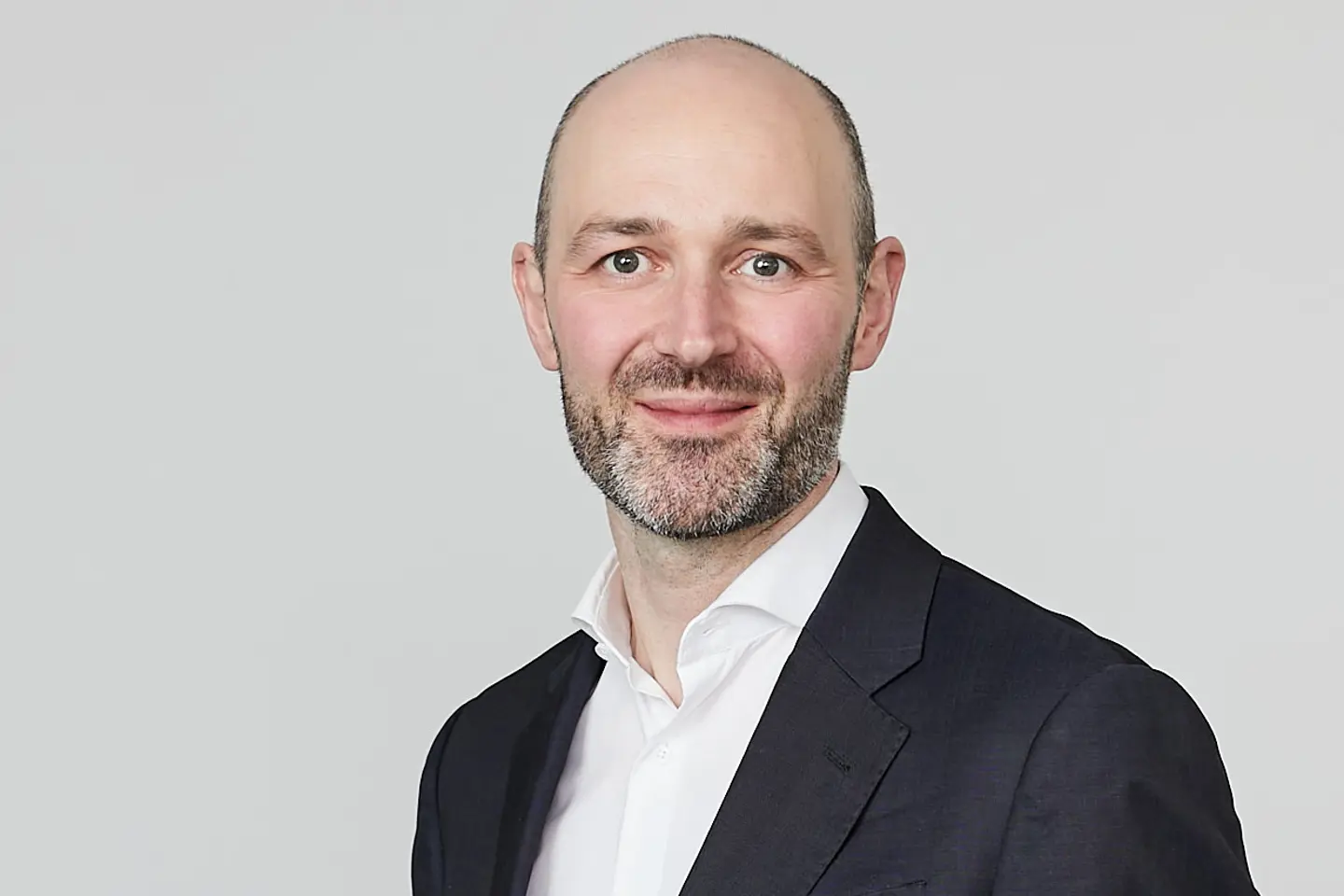
Declan Byrne
Head of Agency services | Corporate and Fiduciary
Ireland

Declan Byrne
Head of Agency services
Ireland


From the outside, structured finance may appear defined by documentation and deal mechanics, but in practice, the success of any transaction depends on how effectively those structures are implemented and administered day to day.
In this Q&A, Declan Byrne, Ogier Global’s new appointed Head of Agency services for the Debt Capital Markets team, shares his perspective on the operational realities behind complex transactions, what clients expect from agency and trustee providers today, and how integrated delivery is shaping the market.
What drew me to Ogier was the opportunity to join a team with a strong reputation in the market and a genuinely integrated offering.
One of Ogier’s core strengths is its ability to work with clients to structure transactions from a legal perspective, including drafting documentation and advising on the most effective tax structure. Building on that, Ogier Global's Debt Capital Markets team provides the additional capital markets services needed to bring those transactions to market, such as incorporating special purpose vehicles, providing company secretarial support and offering both facility agent and security agent services.
For clients, this means their transactions can be structured, executed and administered under one roof. From my perspective, that combination of legal expertise, operational capability and governance support creates a more seamless and efficient experience.
This is particularly valuable in structured finance and for clients managing AIFs and Section 110 SPVs, where technical expertise, strong oversight and reliable day-to-day administration are essential. Being able to access those services through one integrated platform simplifies execution, strengthens governance and gives clients confidence that their structures are being supported in a coordinated and practical way.
I started out my career in debt markets as a junior bond trader for ABN Amro. I quickly moved into credit markets when I joined Merrill Lynch, working in the secondary loan market settling and administering portfolios of loans both par and distressed. From Merrill Lynch, which became Bank of America Merrill Lynch, I moved onto work for BNY Mellon. Here I managed a large loan agency portfolio covering leveraged loans that traded in the secondary market on both the Loan Market Association (LMA) and Loan Syndications and Trading Association (LSTA). This included settlement and lifecycle management, as well as being appointed as facility agent and security agent for multi-national clients. I also managed a team focused on collateralised loan obligations (CLOs) where BNY Mellon were named as collateral administrator, including maintaining day-to-day operations such as positions, cash and compliance.
I think the top priorities are efficiency, certainty of execution and strong governance. Clients want structures that can be implemented smoothly. At the same time, they are looking for flexibility and responsiveness, particularly in a market that continues to evolve and where timelines can often be tight.
From my perspective, clients also place a high value on clear communication, regulatory awareness and reliable day-to-day administration. They want confidence that the structure will not only be set up correctly but also continue to perform as expected. For me, the ability to combine strong oversight with practical execution is what matters most to clients.
When I approach transactional coordination and cashflow management, I always start with accuracy, control and clear communication. I focus on understanding the transaction documents, roles, key dates and payment mechanics from the outset. That foundation helps me make sure the deal is administered smoothly throughout its full lifecycle, from closing right through to ongoing servicing.
From a cashflow perspective, I see my role as making sure every payment is calculated, reconciled and allocated exactly in line with the agreed waterfall. This involves coordinating with counterparties and making sure stakeholders receive clear, timely and accurate information. Across both loan and securitisation structures, I believe a disciplined and proactive approach is essential to managing risk, maintaining compliance and giving clients confidence.
When it comes to regulatory compliance and borrower communication, I always start by making sure I have a clear understanding of the transaction documents, the relevant regulatory framework and each party’s responsibilities. I focus on maintaining strong controls and accurate records so that key obligations, reporting deadlines and covenant requirements are tracked properly and met on time.
From a borrower communication perspective, I believe it is important to be clear, responsive and consistent. Borrowers and lenders require timely information and clear guidance, and I see it as part of my role to provide that in a straightforward and dependable way. By keeping communication open and making sure notices, requests and follow-ups are handled accurately and efficiently, it can help transactions run smoothly while also building trust and confidence.
When I think about enhancing governance and scalable infrastructure for lenders and investors, I focus on strong controls, clear processes and reliable operational delivery. Good governance starts with clearly defined roles and responsibilities from the outset. In practice, that means robust documentation, disciplined oversight, accurate record keeping and transparent reporting so that everyone involved can have confidence in how the structure is being administered.
From an infrastructure perspective, I see scalability as building processes that are consistent, efficient and able to support growth without losing control. This includes well-defined workflows, maintaining strong cash and data management practices, ensuring the operational framework can adapt as transaction volume or complexity increases. This approach helps reduce operational risk, improve transparency and supports better-informed decisions throughout the lifecycle of a transaction.
Having worked on loan transactions for more than 25 years, I have been fortunate to see the full lifecycle of a loan. The main duties of a facility agent is to ensure that payments are allocated per the waterfall correctly and on time. Similarly in CLO roles, ensuring that the priority of a waterfall payment is adhered to.
I have also monitored numerous covenants, including compliance ticklers such as annual reports and quarterly compliance certificates. This includes financial metrics such as loan to value (LTV) calculations, debt service reserves and other ratios. On the CLO side, I am familiar with key tests such as spread, overcollateralisation, interest coverage, quality and concentration tests.
One of the key challenges I see in agency roles supporting complex securitisation and fund structures is managing the level of operational complexity involved. These transactions often involve multiple parties, detailed documentation, strict payment mechanics and ongoing reporting requirements. This requires a high degree of accuracy, control and coordination to keep all parties aligned and ensure the structure continues to operate in line with agreed terms.
Another important challenge I see is balancing strong governance with the need to remain responsive and flexible. Clients expect both oversight and adaptability to investor requirements and changing market conditions. I address this by focusing on clear processes, disciplined execution and proactive communication to ensure risks are identified early, obligations are met on time and stakeholders can have confidence in both the administration and the overall integrity of the structure.
My experience allows me to bring both practical market knowledge and strong operational discipline to portfolio management and the ongoing administration of debt capital markets and structured finance products. Having worked across loan agency, security agency and collateral administration roles, I have built up a detailed understanding of how these structures work in practice, from transaction execution through to ongoing cash management, compliance monitoring and stakeholder coordination. I believe that breadth of experience helps me support clients in a way that is not only technically strong, but also dependable from an operational perspective.
In terms of operational stability, I see my role as combining strong controls with a proactive and solutions-focused approach. For me, it is about making sure processes are well managed, reporting is accurate and obligations are tracked closely so that I can help strengthen the consistency and resilience of the service offering. In portfolio management terms, that also means keeping clear oversight of transaction activity, identifying potential risks early and helping to ensure structures continue to perform as intended. I see that as an important part of supporting Ogier Global’s continued growth and giving clients confidence in an increasingly sophisticated market.
Find out more about Ogier Global’s Debt Capital Markets services, and Ogier’s specialist Structured Finance team, or contact Declan Byrne or Michael Carroll.
Sign up to receive updates and newsletters from us.
Sign up